

Dr. Driving
SUD Inc.
Dr. Driving is the kind of racing game I open when I want a quick driving challenge rather than a full console-style race. It puts the focus on controlling a car through ordinary road situations, completing tasks, and staying accurate under pressure. That sounds simple, but the small mistakes matter, which is why a short session can become surprisingly tense.
I spent time treating it less like a game to rush through and more like a driving routine to learn. That changed my opinion of it. The appeal is not a huge collection of cars or a dramatic championship presentation. The appeal is learning how the controls respond, choosing safer movements, and gradually becoming less wasteful with every attempt. If you enjoy improving through repetition, this game has much more depth than its plain presentation suggests.
How the everyday driving loop works
The basic workflow is easy to understand. I choose a task, control the vehicle through the road, and try to finish without turning a manageable situation into a crash. The game asks for attention in short bursts, so it fits naturally into a commute, a waiting room, or a few minutes before bed. I do not need to prepare for a long event or remember a complicated story before playing.
Related News
Why Dr. Driving Is the Mobile Game Everyone's Talking About

Why Dr. Driving Makes Precision the New Mobile Racing Skill
That simplicity is also the first important trade-off. Dr. Driving does not feel like a traditional arcade racer built around constant speed, spectacular overtakes, and wide tracks. It is closer to a compact driving test with racing-game presentation. The challenge comes from steering, timing, traffic awareness, and completing the objective efficiently rather than from simply reaching the finish line first.
For a realistic everyday example, I might play a few attempts during a short break. On the first run, I tend to focus on moving quickly. After making a poor turn or hitting something, I replay the same kind of situation with a different approach: slower entry, earlier steering, and less frantic correction. That repeatable loop makes the game useful for players who like seeing a mistake become a practical lesson.
Related News

Why WhatsApp Messenger Still Makes Everyday Communication Feel Easy

Jurassic World: The Game Is the Better Dino Tycoon for Strategic Players

Threads in Real Life: Who Should Join, Lurk, or Leave

How SHEIN Turned Shopping Into an Endless Content Feed

How to Make Fortnite Feel Smarter on Mobile

Should You Switch to Microsoft Outlook on Mobile?
The controls are approachable, but they still demand adjustment. I found that pressing too aggressively often creates more problems than it solves. Smooth inputs give me time to read the road and react, while hurried movements can send the car toward trouble before I have a chance to recover. This is one of the game’s strongest qualities: it rewards restraint without becoming a formal simulator.
What I check before trying to improve
Before chasing better results, I recommend learning the feel of the car in a low-pressure way. Pay attention to how much steering is needed for a turn, how quickly the vehicle responds after a correction, and how much room is required to avoid nearby obstacles. These details are more valuable than trying to memorize a single perfect route, because they help across different tasks.
I also avoid making several corrections at once. When a turn goes badly, my first instinct is to steer harder, change direction again, and accelerate immediately. That usually produces a second mistake. A better habit is to make one clear correction, let the car settle, and then decide whether speed is safe. This sounds obvious, but it makes a noticeable difference in a game where rushed reactions are punished.
Gallery
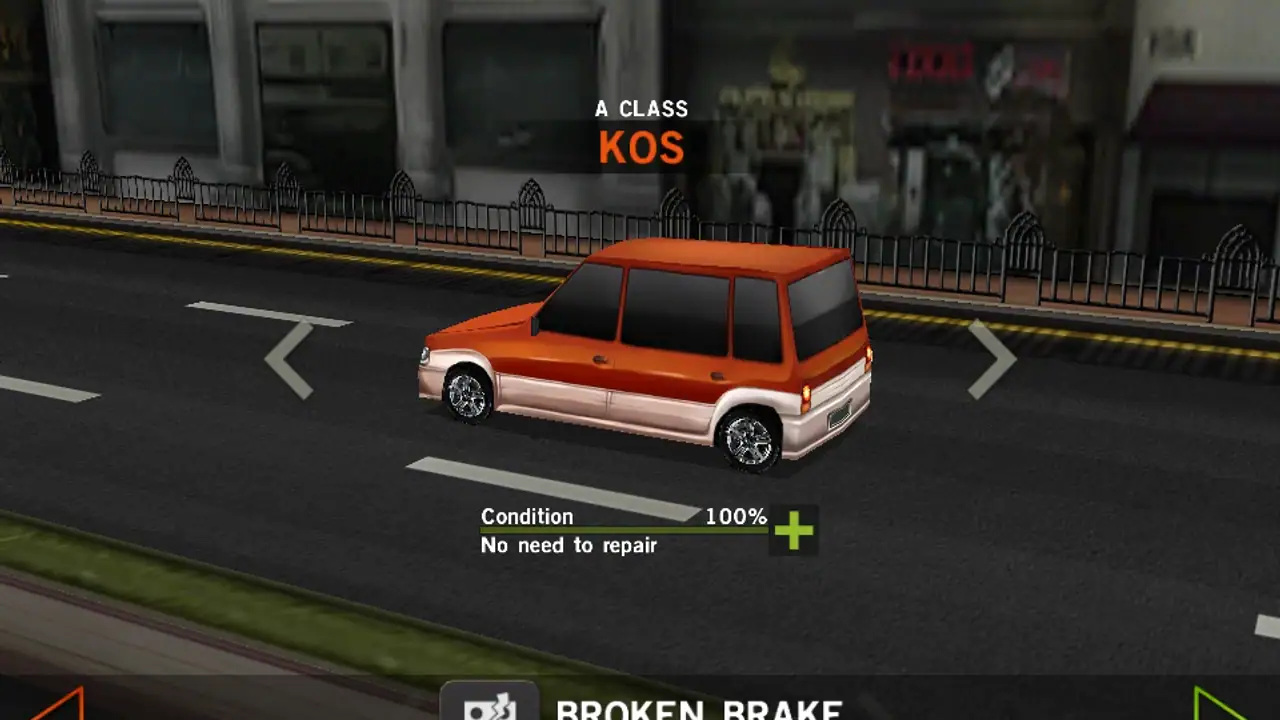
The developer, SUD Inc., keeps the presentation focused on the driving itself. There is no need to learn a large collection of menus before starting. That makes the game friendly to casual players, although people expecting a highly detailed career structure may find the experience limited. I see it as a quick skill game first and a long-term racing package second.
Settings and preparation worth checking
One practical step is checking the available control and display options before deciding whether the game feels comfortable. Small differences in touch response, screen visibility, and the way the phone is held can affect driving more than a new player might expect. I prefer to play with a stable grip and enough screen space to make deliberate movements rather than trying to operate the game while walking or multitasking.
It is also worth checking the game’s current behavior on your device after installation. The listed minimum operating system is Android 6.0, so compatibility is broad, but an older phone can still make touch input feel less comfortable than a newer one. This is not a reason to dismiss the game; it is simply a reminder that precise driving depends on a responsive screen and a steady frame of reference.
The current version is 1.73. I would still treat the first few minutes as a calibration period instead of judging the game from one awkward attempt. If the steering feels too sensitive, I first change my finger movement and grip before assuming the controls are badly designed. Sometimes the issue is not the setting itself but holding the phone at an angle that makes short corrections difficult.
Because the content rating is Teen, parents should consider whether the game suits the player using the device. The rating is one part of that decision, while the game’s driving-focused format makes it easy to understand what the main activity involves. I would not present it as a realistic road-safety lesson, though. It borrows the idea of driving tasks for gameplay, not for professional instruction.
Repeatable patterns that make progress faster
Experienced play is less about finding a secret shortcut and more about reducing unnecessary actions. I try to enter turns with a plan rather than reacting halfway through them. If the road looks tight, I sacrifice a little speed early so I can leave the turn cleanly. A fast entry followed by several corrections usually feels quicker but often costs more time and control.
Another useful pattern is separating observation from input. I look ahead first, identify the next problem, and then make the movement. New players often stare at the car itself, which makes the road seem to arrive too quickly. Looking toward the next turn or obstacle gives me more time to prepare and prevents the familiar cycle of late steering followed by overcorrection.
I also repeat one task several times with one goal per attempt. In one run I may focus on avoiding collisions; in the next I may work on smoother turns; after that I may try to improve completion speed. This is more productive than trying to perfect everything at once. It turns a vague feeling of failure into a clear question: was the problem timing, steering, or impatience?
That method is especially helpful for people who normally prefer endless racers. In a typical arcade racer, taking a corner aggressively can be exciting and sometimes necessary. Here, the better choice is often the controlled one. Dr. Driving rewards a different kind of confidence: knowing when not to push. Players who enjoy time trials, precision games, or short mobile challenges may appreciate this more than fans seeking constant spectacle.
There is also a useful habit for playing in short sessions. I stop after a clean attempt instead of continuing until every run becomes careless. Since the game is easy to restart, it is tempting to chase one more try while attention is fading. I get better results by treating a focused handful of attempts as practice and returning later with a fresh hand and clearer judgment.
Where the game shows its limits
The same focused design that makes Dr. Driving accessible can make it feel narrow. Players looking for licensed vehicles, large open environments, deep customization, or a broad multiplayer competition should compare it with more elaborate racing games. Those alternatives are better when the main goal is collecting cars, building a long career, or enjoying visual spectacle.
This game is also not the right choice if you want a pure speed experience. The driving tasks can be tense, but the satisfaction comes from control and completion rather than from racing around a circuit with a full field of opponents. Someone who wants constant overtaking may find the pace restrained. I would recommend it more readily to a player who likes careful movement and compact objectives.
The free price makes it easy to try, but the presence of in-app purchases ranging from $1.99 to $9.99 per item means I would still review purchase settings before handing the phone to a child or sharing the device. I prefer to decide in advance whether I am willing to spend anything, rather than making that decision in the middle of a frustrating attempt. The game is playable as a free download, while optional purchases can change how a particular player approaches progression.
Its enormous audience suggests strong long-term familiarity: Dr. Driving has passed 500 million installs, with an average rating of 4.3 from around 6.4 million ratings and about 198 thousand written reviews. Those figures do not replace personal testing, but they do help explain why the game remains easy to encounter on mobile. It has reached far beyond the audience that normally seeks demanding racing titles.
There are also moments when the simple presentation works against it. If I want a strong sense of place, detailed weather, cinematic sound, or a rich progression system, I notice the gap quickly. The game’s charm depends on accepting its compact scope. I would rather play it for focused sessions than expect it to become a complete substitute for a larger racing game.
Who should install it, and who should skip it
I think it is a good fit for someone who wants a free driving game that starts quickly, works well in short sessions, and rewards careful repetition. It suits players who enjoy experimenting with input, learning from small errors, and improving a familiar task without needing a long story. It can also work for casual players who are curious about driving games but do not want to begin with a complicated simulation.
I would suggest skipping it if your priority is realistic vehicle handling, extensive car tuning, competitive online racing, or a large visual presentation. A dedicated simulator or a more traditional arcade racer will serve those needs better. The same advice applies if you dislike repeating short challenges. Dr. Driving expects you to learn through doing the same kind of action again, and that structure will feel motivating to some people but repetitive to others.
One question many new players have is whether it is difficult to start. My answer is no, but becoming consistent takes longer than understanding the controls. The first attempts are accessible because the objective is clear. The difficulty appears when I try to combine accuracy, speed, and calm reactions. That gradual increase is why I find it more satisfying than a game that gives away success immediately.
Another practical question is whether it works for brief play. Yes, that is where it makes the most sense to me. I can complete a small amount of practice without committing to a long race or waiting for a large event to load. If I only have a few minutes, I can still work on one specific habit and finish with a useful result.
Players may also wonder whether it should be treated as driving practice. I would keep that expectation firmly in check. It can encourage attention, timing, and controlled reactions in a game environment, but it does not replace lessons, road rules, or supervised driving. Its value is entertainment with a precision-focused rhythm, not instruction for real traffic.
My verdict after learning its rhythm
Dr. Driving works because it keeps asking a simple question: can I complete this driving task without turning impatience into a mistake? The answer improves when I use a stable grip, look ahead, enter turns more carefully, and practice one skill at a time. Those habits make the experience feel more deliberate than its minimal presentation first suggests.
I appreciate that it does not require a large time commitment. I can pick it up for a short break, identify one weakness, and put it down without feeling that I abandoned a complicated campaign. The free entry point is another advantage, although I would keep the optional purchase range in mind when configuring a shared device.
My recommendation is therefore specific rather than universal. Install it if you want a compact racing game built around control, repetition, and quick driving challenges. Choose another option if you need deep simulation, dramatic racing spectacle, or a broad competitive structure. For me, its best use is as a focused mobile game: short sessions, clear goals, and enough friction to make careful driving feel rewarding.
After the novelty fades, the game stands or falls on whether its repeatable tasks remain enjoyable. I found that they do when I approach them with a small plan instead of simply rushing through. That is the real mastery loop here: not discovering an elaborate hidden system, but building reliable habits until the road feels less chaotic and my decisions become cleaner.
FAQs for Dr. Driving
What features does Dr. Driving offer to enhance gameplay?
Dr. Driving offers a unique driving simulation experience with various missions and challenges that test your driving skills. Features include realistic car handling, a range of vehicles to choose from, and urban driving environments. The game also offers multiplayer modes and leaderboard rankings to compete with friends, adding a social element to the gameplay.
Is Dr. Driving free to download and play?
Dr. Driving is free to download and play, but it includes optional in-app purchases. Players can buy additional game currency to unlock cars or enhance features faster. While the game can be enjoyed without spending money, these purchases can speed up progress and provide a more customized experience.
What are the system requirements for Dr. Driving on Android and iOS?
For Android users, Dr. Driving requires Android OS 4.1 or later, with at least 1 GB of RAM for smooth performance. iOS users need iOS 9.0 or later, compatible with iPhone, iPad, and iPod touch. Adequate storage space is also necessary to accommodate updates and additional content.
How does multiplayer mode work in Dr. Driving?
In Dr. Driving’s multiplayer mode, players can compete against each other in real-time. You can challenge friends or random opponents and see who completes the driving missions more efficiently. The multiplayer experience is enhanced by leaderboards, where you can track your rankings and achievements against global players.
Are there any ads in Dr. Driving, and how do they affect gameplay?
Dr. Driving contains ads that appear intermittently during gameplay. While they provide a revenue stream that allows the game to remain free, ads can sometimes interrupt the experience. However, players can opt to remove ads through a one-time in-app purchase, ensuring an uninterrupted gaming experience.
Pros
- Realistic driving mechanics.
- Low battery consumption.
- Smooth and responsive controls.
- Variety of challenging missions.
- No intrusive ads.
Cons
- Limited graphics detail.
- No multiplayer mode.
- Repetitive gameplay over time.
- In-app purchases required for upgrades.
- No background music.


